Finding large amounts of hair in the shower a few months after having a baby is one of the most common and least-discussed experiences of new motherhood. It is almost always temporary. Here is why it happens and how to gently support your scalp while it recovers.
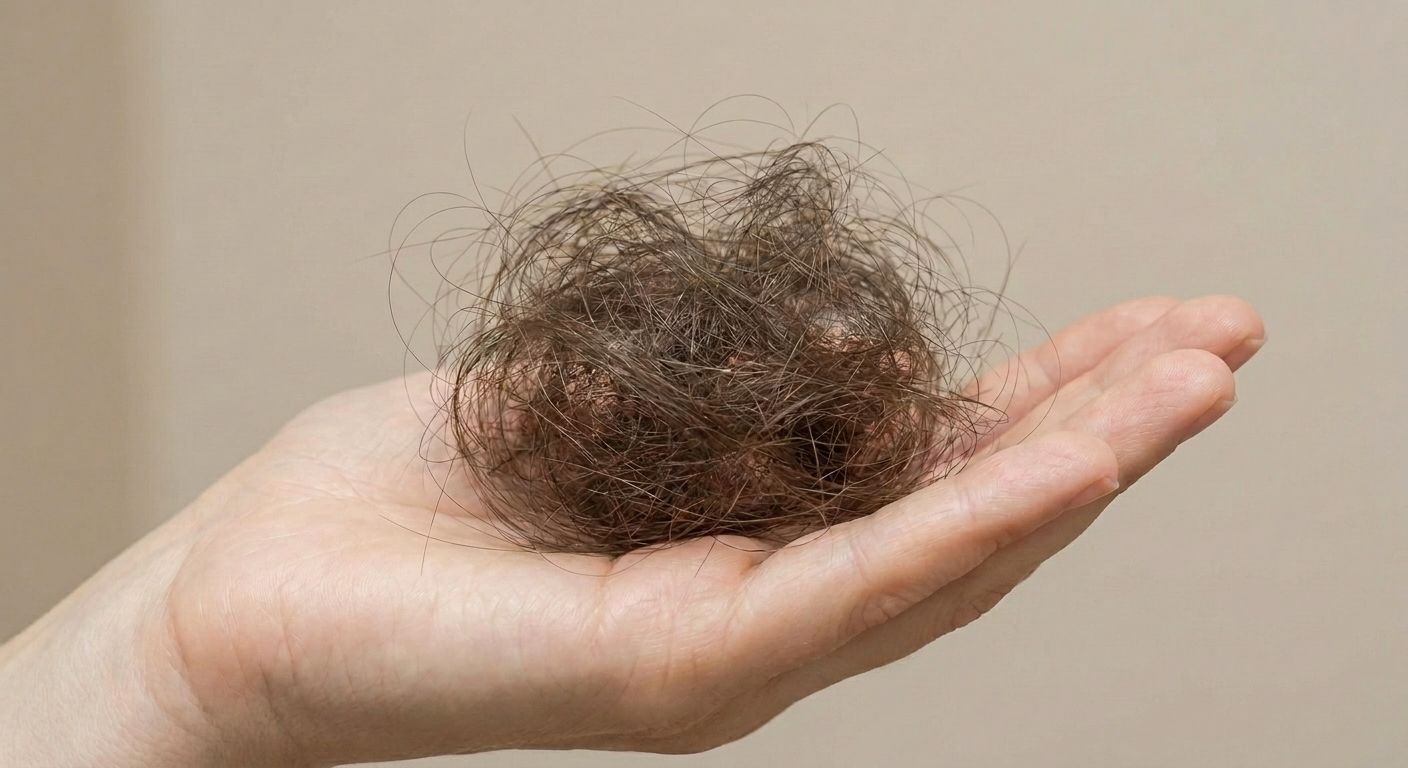
She came in at about three months postpartum, holding her phone with a photo of what had come out in the shower that morning. She had a newborn, she was sleep-deprived, and now this. She was convinced something was seriously wrong. She wanted to know if she was going bald. She was not. What she was experiencing, postpartum telogen effluvium, is one of the most common things I see in new mothers. The majority of women go through it. The follicles are completely intact. Nothing has been damaged. The hair she was losing had been held in the growth phase for the entire duration of her pregnancy, courtesy of elevated estrogen, and now that her hormone levels had returned to baseline, it was all shedding at once. I told her to take a breath. Her hair would grow back. But I understood why it was frightening, especially in those early months when nothing feels entirely under control.
I explain it to new mothers this way: during pregnancy, your estrogen levels are extraordinarily high, and one of the things estrogen does is keep your hair follicles locked in the growth phase. So rather than cycling normally, a much higher proportion of your hairs just stay put and keep growing. This is why many women notice their hair feeling thicker and fuller during pregnancy. After delivery, estrogen drops sharply. That signal releases all of those follicles at once into the resting phase. Two to four months later, they all shed simultaneously. The result is what she described: handfuls in the shower, hair on the pillow, a brush full of what feels like too much. It is alarming because it is concentrated in time. But it is not hair you are losing permanently. It is hair you were temporarily holding onto. On top of the hormonal mechanism, the physical demands of labor, the nutritional shifts of breastfeeding, the sleep deprivation, and the emotional weight of new parenthood can all extend or amplify the episode. We checked her iron and ferritin, which were on the lower end, and that gave us something concrete to address while her hormones rebalanced.
What I Tell My Patients
If your shedding continues beyond 6 months postpartum, or if you notice patchy loss, scalp symptoms, or shedding that feels like it is getting worse rather than better, see a dermatologist. Prolonged shedding after delivery can indicate thyroid dysfunction, iron deficiency anemia, or an underlying condition that developed or worsened during pregnancy. These are common, treatable, and worth identifying early.
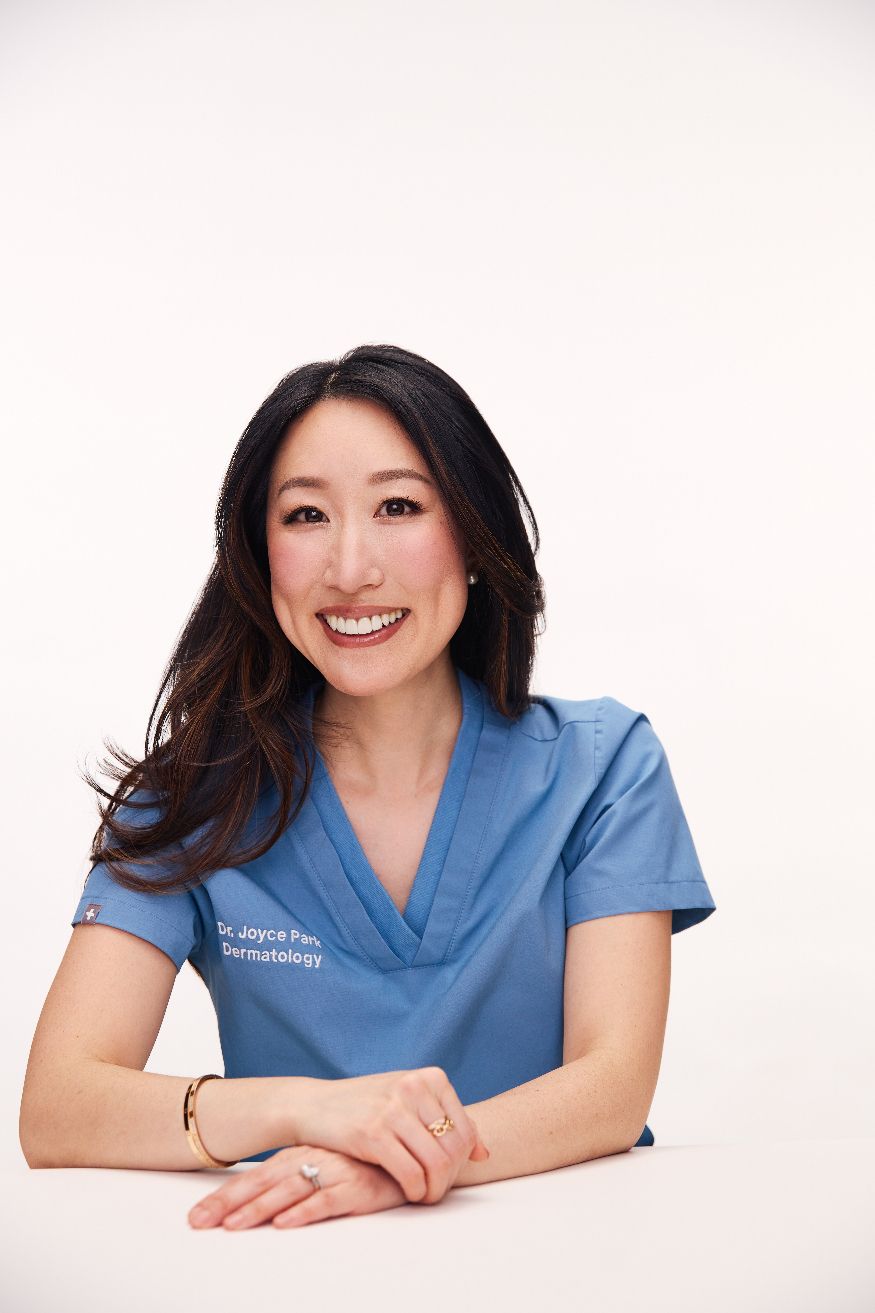
Dr. Joyce Park
Dermatologist & Founder of Kerativ
During and after the postpartum period, gentle and effective scalp care creates the best environment for your follicles to recover. Because safety during breastfeeding is a priority, we have tailored our recommendation below with that in mind.
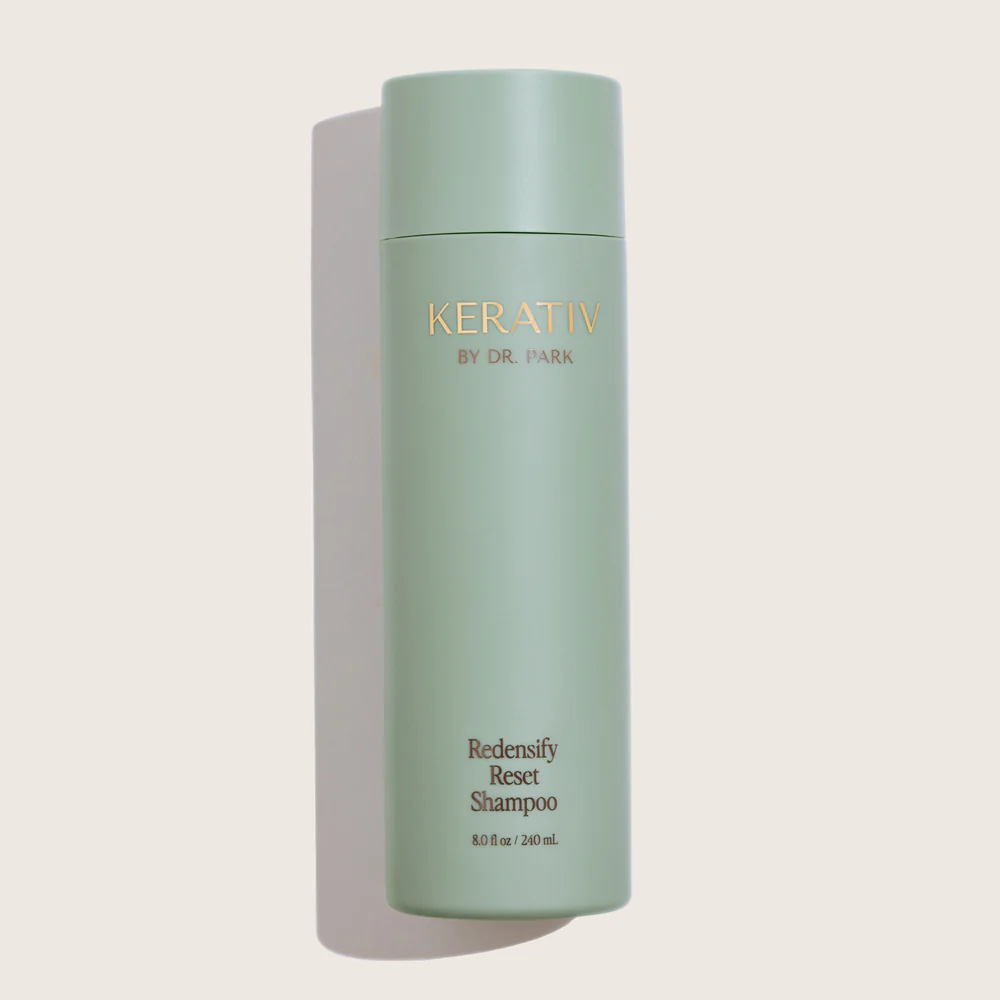
Redensify Reset Shampoo
Safe During Breastfeeding
A dermatologist-developed, sulfate-free gel shampoo that gently cleanses the scalp and hair, adding lightweight volume to fine strands. Calms and soothes the scalp, removes buildup, and leaves hair bouncy, smooth, and soft. Apply directly to the scalp, massage gently for 2 to 3 minutes, leave on for a few minutes, then rinse.
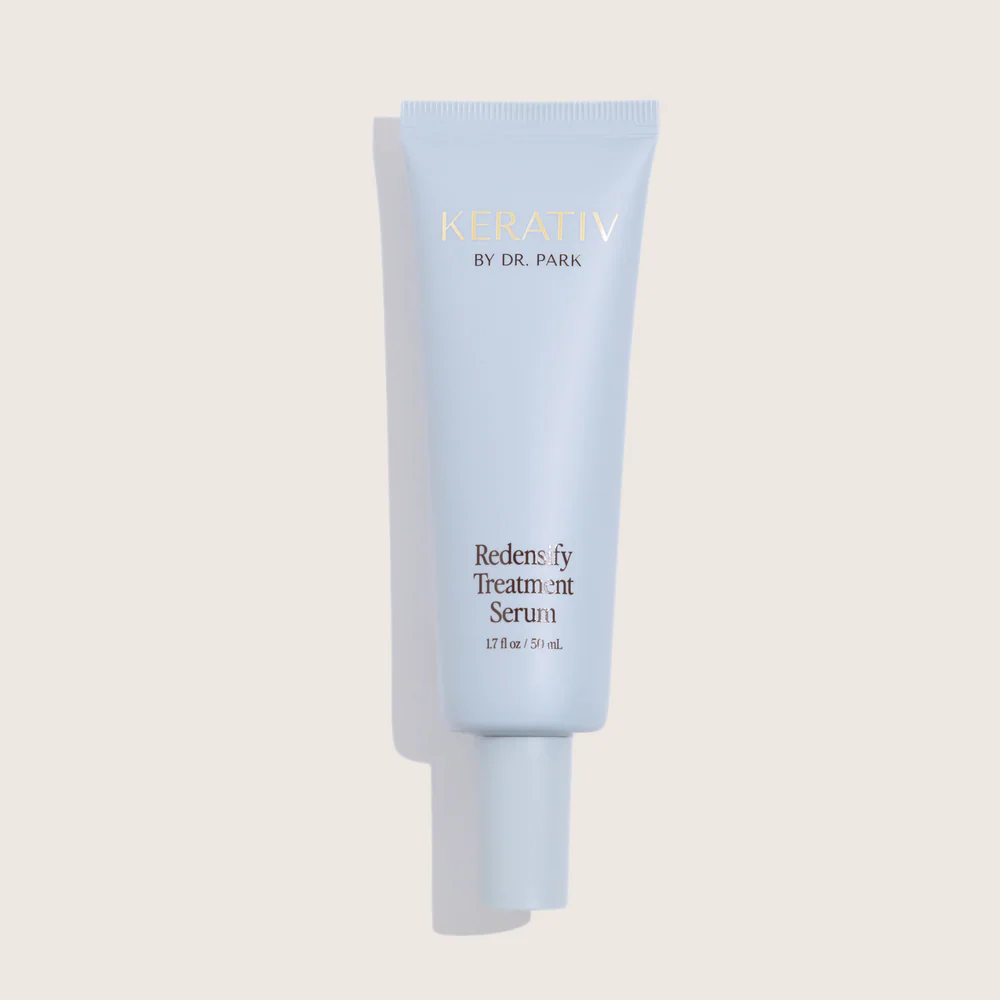
Redensify Treatment Serum
Add Once You Are Done Breastfeeding
Not recommended during pregnancy or breastfeeding. Once you have finished breastfeeding, this twice-daily leave-on serum supports the scalp and follicles to help hair look fuller, denser, and healthier. Clinically shown to increase hair volume and density after 12 weeks.* Apply to a dry or wet scalp and do not rinse.
A clean, calm scalp supports a healthy follicle environment
Follicles returning to the anagen phase do so in an environment shaped by scalp health. Gentle, effective cleansing supports a balanced scalp without adding irritation stress.
Sulfate-free formula gentle enough for a demanding season
New motherhood is exhausting. The Reset Shampoo is formulated without sulfates, alcohol, or parabens, and is color safe. Suitable for all hair and scalp types including fine, thinning, and sensitive.
Start the shampoo now, add the serum later
Beginning a consistent scalp routine with the shampoo during the postpartum period sets the foundation. Once breastfeeding is complete, adding the Treatment Serum gives your scalp a more comprehensive regimen for ongoing density support.
Dermatologist-developed for real hair concerns
The Redensify Regimen was created by board-certified dermatologist Dr. Joyce Park with thinning scalps in mind. Vegan, cruelty-free, and fragrance-free.
The Redensify Treatment Serum is not recommended during pregnancy or breastfeeding. The Redensify Reset Shampoo is safe to use during the postpartum period, including while breastfeeding. Always consult your OB-GYN or dermatologist before starting any new scalp treatment while breastfeeding. Cosmetic products are not drugs and are not intended to diagnose, treat, cure, or prevent any disease. *Based on a 12-week clinical study with an independent dermatologist evaluation of hair density and volume.
No. Postpartum hair shedding is almost always temporary. Because the follicles are not damaged, they return to the anagen (growth) phase once hormone levels stabilize, typically within 6 to 12 months postpartum. Most women recover their pre-pregnancy density, though some may notice that their hair is a slightly different texture or grows at a different rate than before.
Postpartum shedding typically peaks between 3 and 4 months after delivery and then gradually slows. Most women see the shed resolve by 6 months postpartum. If heavy shedding continues past 6 months, consult a dermatologist to rule out thyroid dysfunction, iron deficiency, or other conditions that can develop during or after pregnancy.
Yes. The Redensify Reset Shampoo does not contain ingredients that are contraindicated during breastfeeding. It is a gentle, sulfate-free formula safe for use in the postpartum period. As always, if you have specific questions about products during breastfeeding, check with your OB-GYN.
The Redensify Treatment Serum contains a retinoid and saw palmetto. Retinoids are not recommended during pregnancy or breastfeeding. While topical saw palmetto has a different safety profile than oral supplements, we recommend consulting with your healthcare provider before use during pregnancy or breastfeeding, as clinical data on topical use during these periods is limited. Once you have finished breastfeeding, the serum can be added to your routine.
Biotin supplementation is widely marketed for postpartum hair loss but evidence for its benefit is limited to people with a true biotin deficiency, which is uncommon. Iron deficiency, on the other hand, is common in the postpartum period and can significantly worsen shedding. Ask your OB-GYN or physician to check your ferritin levels, especially if you are breastfeeding. Adequate protein intake is also important for hair recovery.