Estrogen does more for your hair than most people realize. As levels shift during perimenopause and drop further into menopause, many women notice their hair becoming finer, shedding more, and losing the density they once had. This is not imagined, and there are things you can do to help.
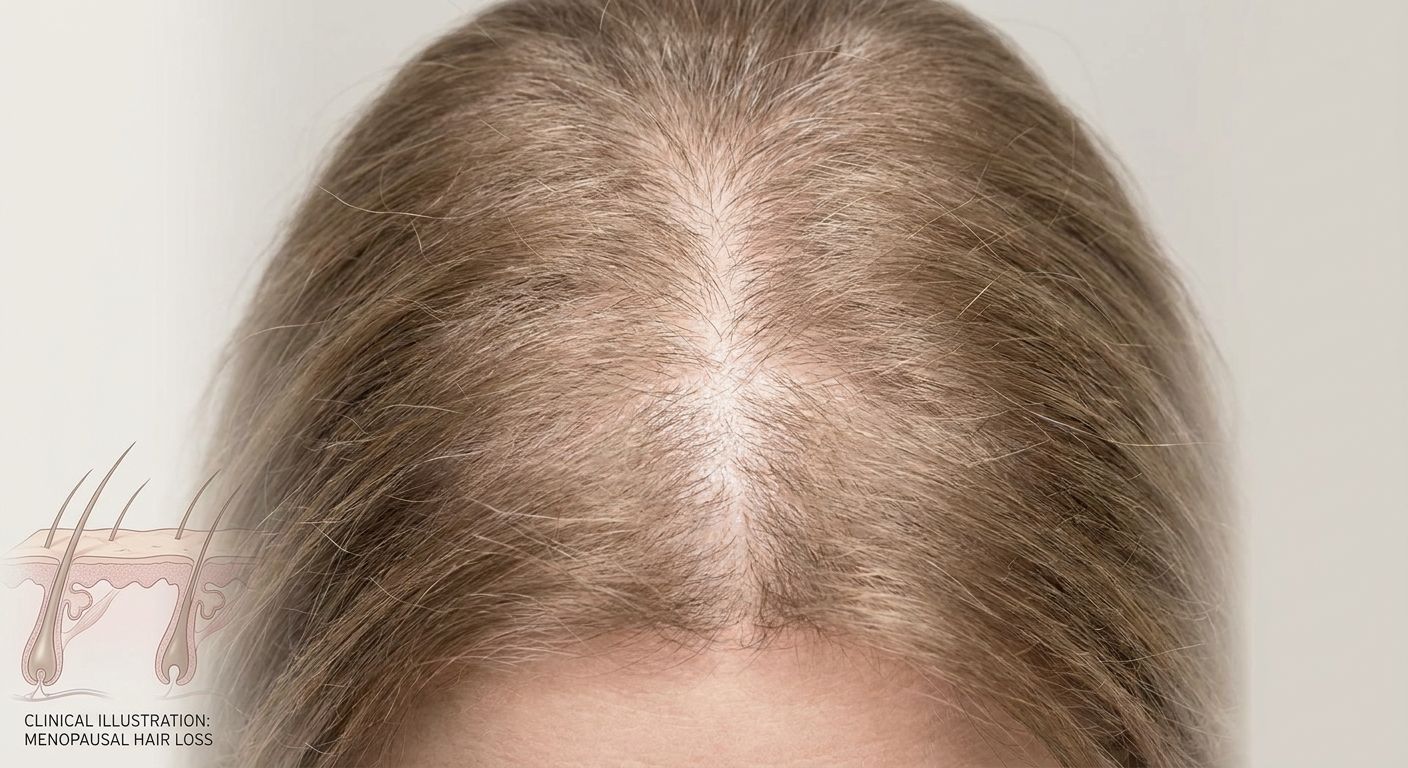
My patient came to see me at 51, about eight months after her last period. She had come for something else entirely, a mole check, but near the end of the appointment she said, almost as an aside, that her hair had been different lately. Thinner. Less of it. She had started parting it differently to cover what she described as the top looking sparse. She asked if I thought it was just stress. I looked at her scalp under dermoscopy. The pattern was unmistakable: widening at the part, miniaturized follicles visible at the crown, with a preserved frontal hairline. This was not stress-related shedding. This was androgenetic alopecia unmasked by the hormonal shift of menopause. I explained that up to two-thirds of postmenopausal women experience this. The change she was describing was real, measurable, and had a clear biological cause. It was also something we could address.
I often describe estrogen as a kind of protector for your hair follicles. It extends the growth phase of the hair cycle, promotes strand thickness, and counteracts the miniaturizing effect of DHT at the follicle. When estrogen levels are adequate, even follicles that carry a genetic predisposition to androgenetic alopecia are partially buffered against that effect. As estrogen falls during perimenopause and drops further into menopause, that protection diminishes. Follicles that had been holding on begin to miniaturize. At the same time, progesterone declines, shifting the hormonal ratio in a direction that increases the relative activity of androgens. The result is hair that grows back finer, shorter, and lighter with each cycle, concentrated at the crown and part line. What makes this particularly challenging to recognize is the pace. It does not announce itself. It arrives over months and years, which is why most women spend considerable time attributing it to something else before seeing a dermatologist and getting a clear answer.
What I Tell My Patients
Menopausal hair thinning is real, measurable, and addressable. A combination of dermatological evaluation, hormone management with your gynecologist or endocrinologist, and a consistent scalp-first topical routine gives you the most complete approach. Waiting to see whether it resolves on its own is not a strategy here. This type of thinning is progressive, and the follicles that are still active today are the ones most responsive to support.
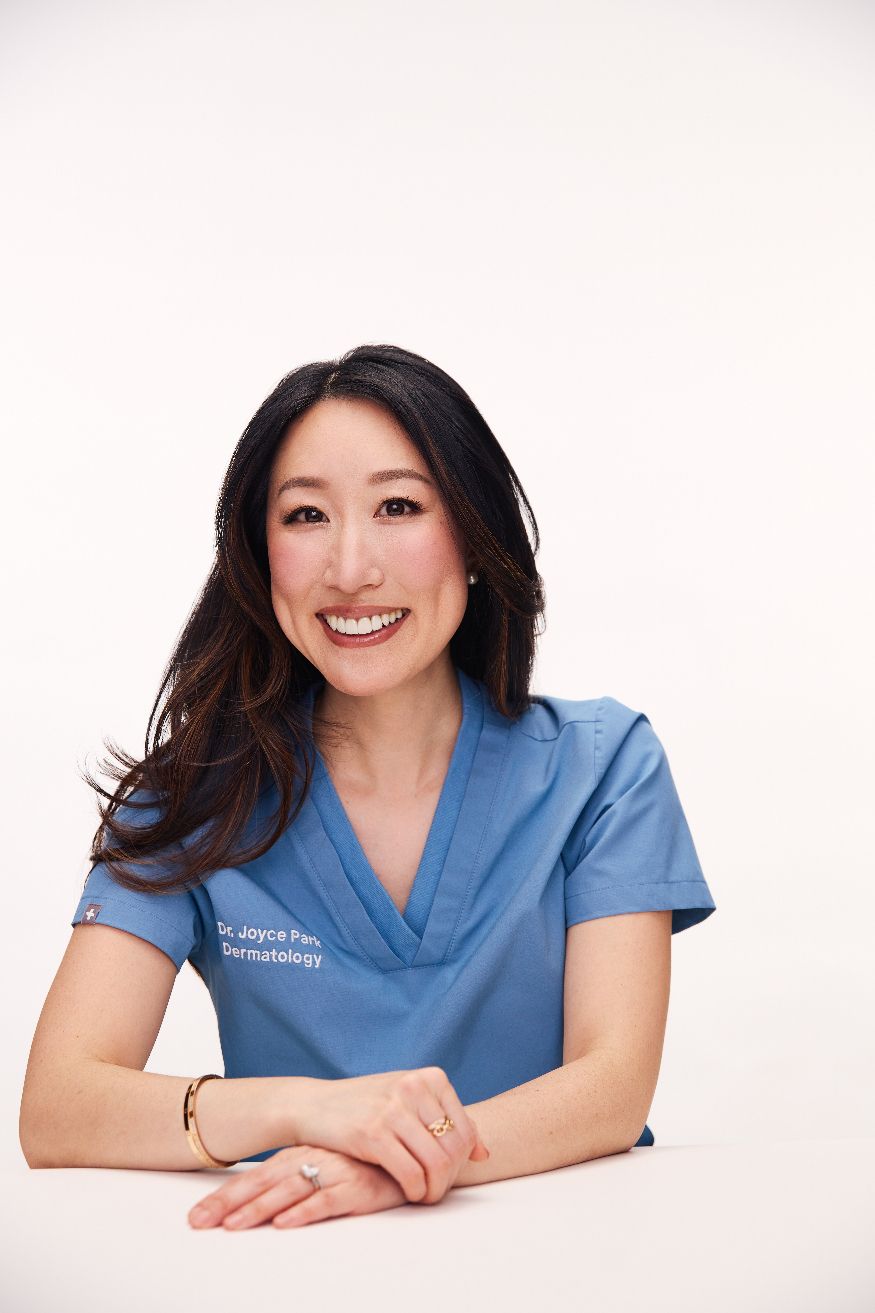
Dr. Joyce Park
Dermatologist & Founder of Kerativ
Developed by board-certified dermatologist Dr. Joyce Park, the Redensify Regimen is built around the principle that a healthy scalp creates the best possible environment for follicles to function. For women navigating the hormonal shifts of perimenopause and menopause, consistent topical scalp care is a meaningful tool.
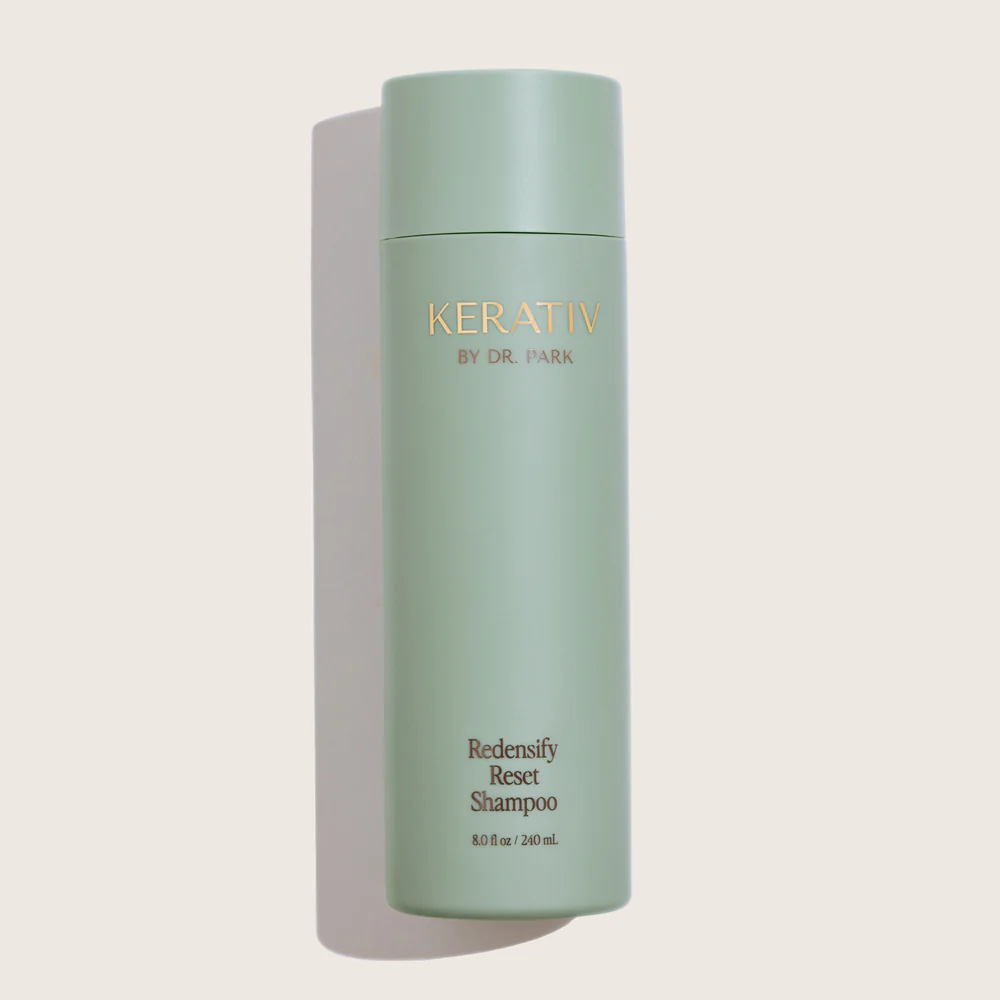
Redensify Reset Shampoo
Scalp-First Cleansing
A dermatologist-developed, sulfate-free volumizing gel shampoo that rebalances the scalp microbiome and gently purifies the scalp to remove buildup. Adds body and volume from root to tip without stripping the moisture barrier. Apply directly to the scalp, leave on for a few minutes, then rinse. Color safe.
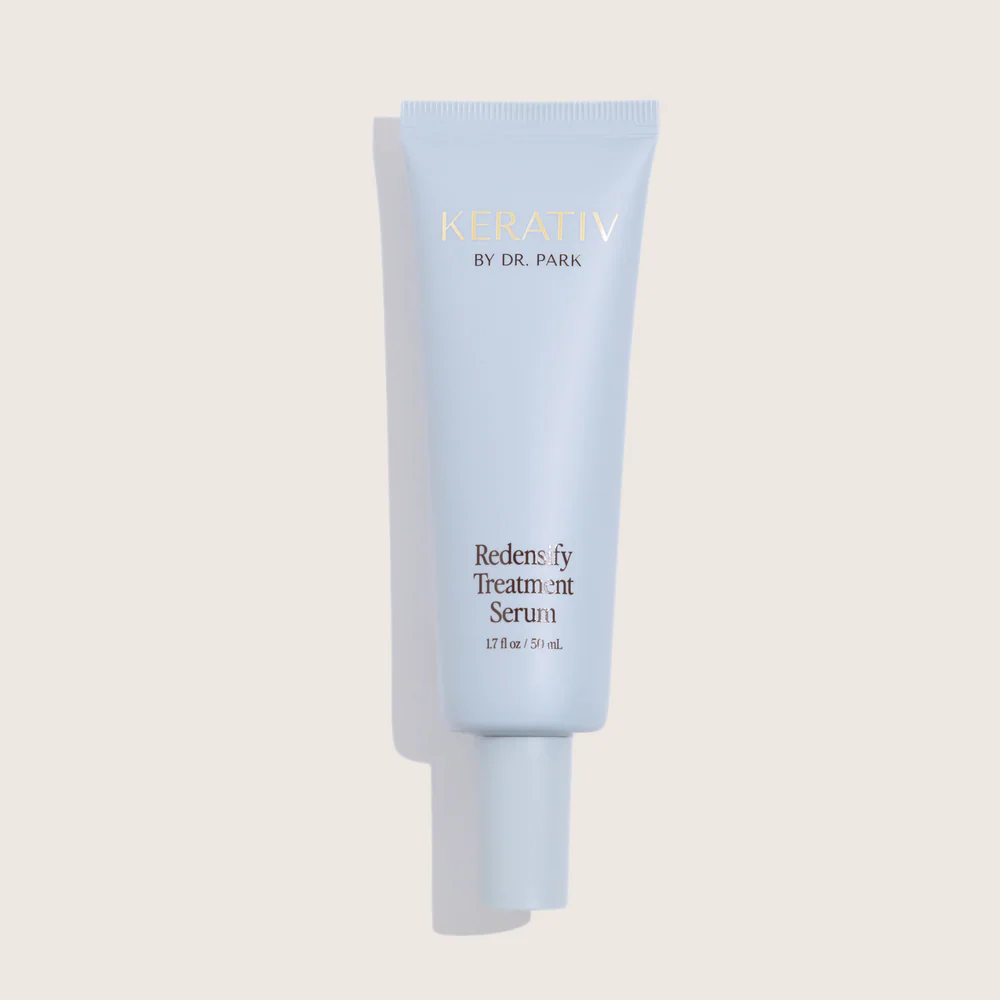
Redensify Treatment Serum
Twice-Daily Scalp Treatment
A dermatologist-developed, fragrance-free scalp serum that nourishes the scalp and follicles to support fuller, denser, healthier-looking hair. Apply twice daily to a dry scalp; do not rinse. Clinically shown to increase hair volume and density after 12 weeks.*
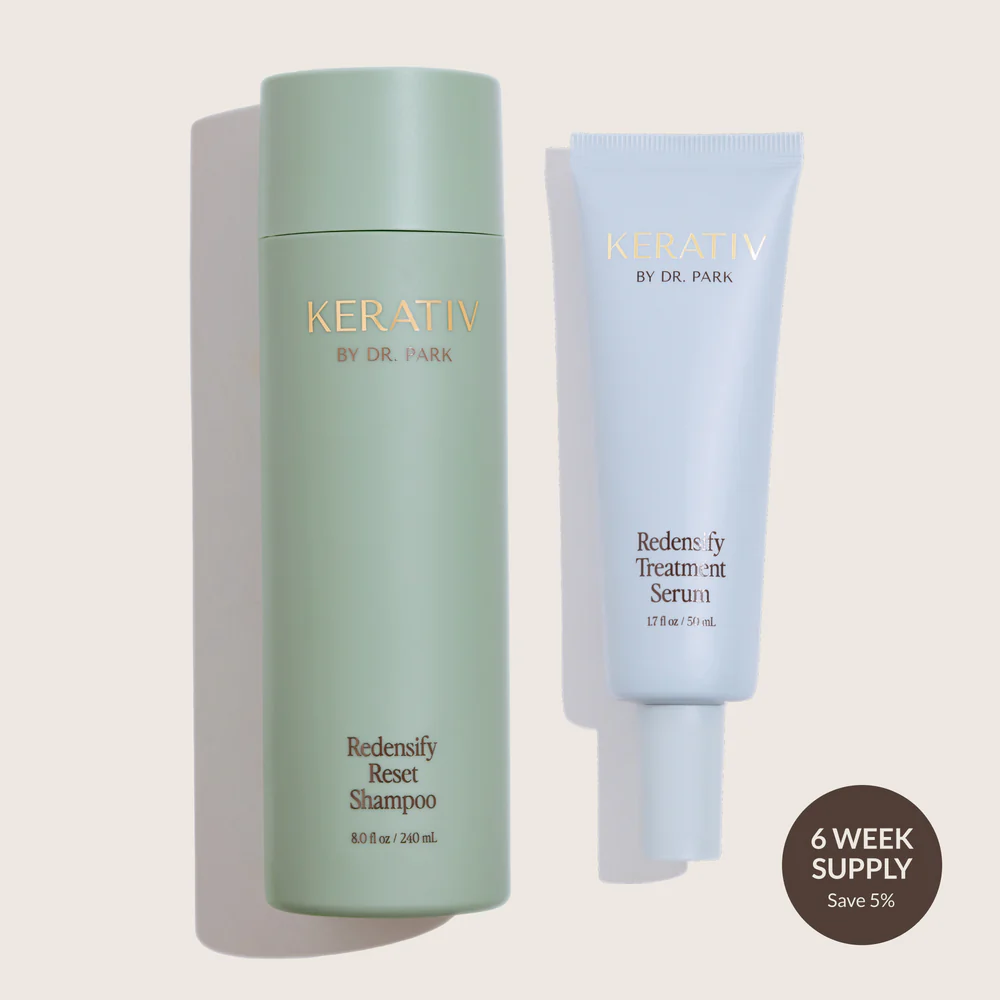
Redensify Regimen
The Complete System
The shampoo and serum together at a bundled price. The most complete and efficient way to begin a proactive scalp-first routine during the menopausal transition.
Supports a healthy follicle environment
The Redensify Treatment Serum is formulated with clinically validated technologies including Redensyl, Kopexil, Saw palmetto, Adenosine, Pumpkin seed oil, Caffeine, and more, to help nourish follicles and support the appearance of fuller, denser hair.
A gentle retinoid helps revitalize scalp skin
Adapinoid, a third-generation gentle retinoid, helps revitalize scalp skin and support healthy cell turnover. Better tolerated than retinol. Use sunscreen with daily use.
Gentle enough for sensitive, transition-stage skin
Scalp sensitivity can shift during hormonal transition. The Redensify Regimen is formulated without sulfates, alcohol, or parabens, and is suitable for all hair and scalp types including fine and thinning hair.
A dermatologist-developed routine for a chronic, evolving condition
Menopausal hair thinning does not resolve on its own. A consistent twice-daily habit gives your scalp the support it needs during and after the transition, and complements any medical options you are exploring with your physician.
Cosmetic products are not drugs and are not intended to diagnose, treat, cure, or prevent any disease. For evaluation and treatment of hair loss during hormonal transition, consult a board-certified dermatologist and your gynecologist or endocrinologist. *Based on a 12-week clinical study with an independent dermatologist evaluation of hair density and volume.
Unlike telogen effluvium, which is temporary, menopausal hair thinning driven by androgenetic alopecia is a chronic, progressive process. Without intervention, density typically continues to decline slowly. The good news is that early and consistent treatment with FDA-approved options like topical minoxidil, combined with supportive scalp care, can significantly slow progression and, in some cases, produce meaningful improvement in density.
For some women, HRT that includes estrogen can help slow or partially reverse the hair thinning associated with menopausal estrogen decline. This is a nuanced clinical decision that depends on your full health history. Discuss the potential hair benefits alongside the broader risks and benefits of HRT with your gynecologist or endocrinologist.
Stress-related shedding (telogen effluvium) is typically diffuse across the entire scalp, appears 2 to 4 months after a trigger, and resolves once the trigger resolves. Menopausal hair thinning is more concentrated at the crown and part line, progresses gradually over months and years, and is driven by hormonal changes rather than an acute stressor. A dermatologist can distinguish between the two through examination and bloodwork.
Consistency is key. Visible improvements in hair density typically require at least 90 days of consistent use. In the first few weeks, your scalp begins to rebalance, and some may notice a brief increase in shedding as follicles shift into a healthier cycle. Around three months, hair starts to look fuller, with less noticeable thinning. With continued use beyond three months, volume and density continue to improve as stronger strands grow in.
Yes. Our founder Dr. Joyce Park recommends topical minoxidil often to her patients, and she formulated these products to work synergistically with your existing routine. The Redensify Regimen is a cosmetic scalp routine, not a drug, and is not known to interact with common prescription hair loss treatments. If you are using topical minoxidil or other prescription medications, consult your dermatologist about timing and layering of applications.