Male pattern thinning affects roughly half of men by age 50. It begins with a predictable hairline recession and crown thinning driven by hormone-sensitive follicles. The sooner you act, the more you can preserve.
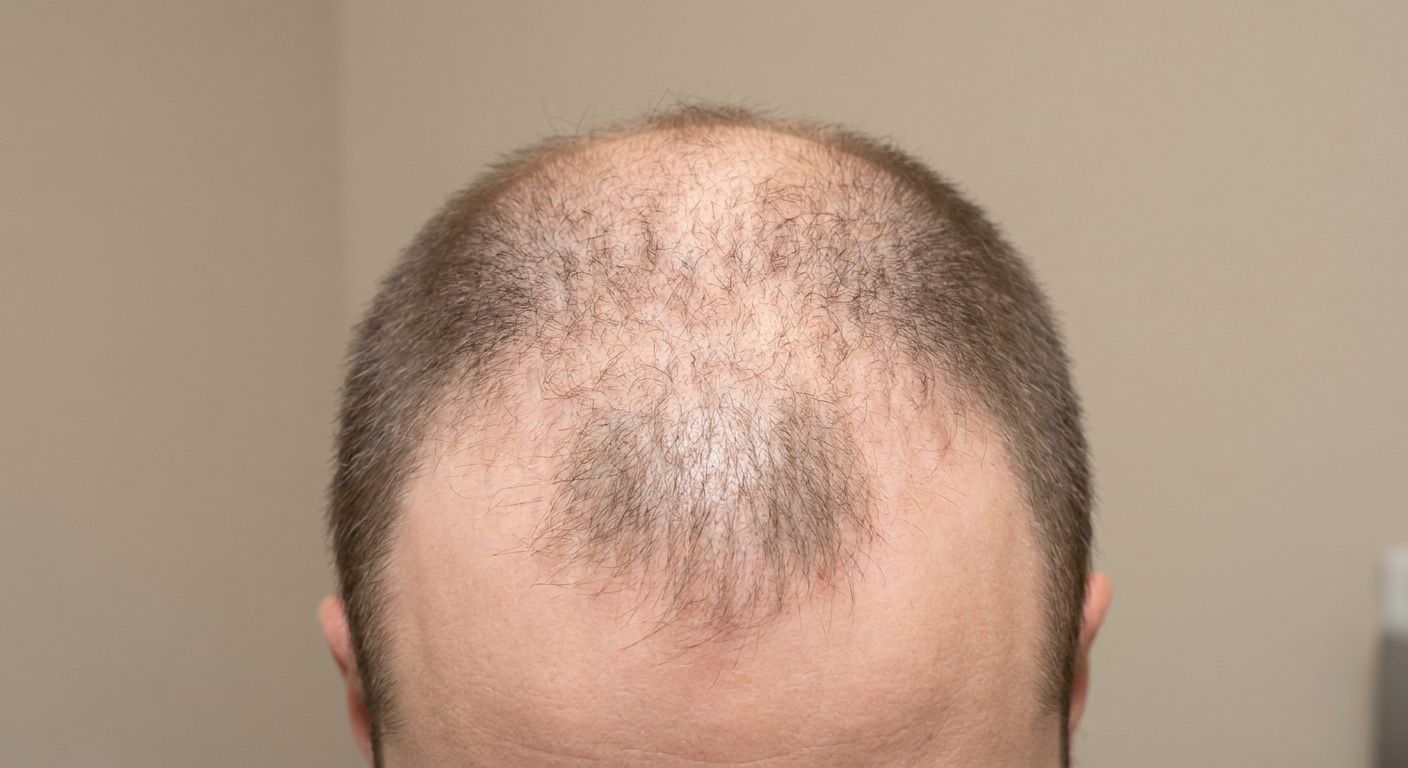
A patient in his early thirties came in last year with photos he had been collecting on his phone for two years. Side by side, they told a clear story: the temples were creeping back, the crown was thinning at the vertex. He had not wanted to come in. He told me his dad had gone bald in his thirties and he figured this was just inevitable. He wanted to know if it was too late. It was not too late, and I told him so directly. What he had was androgenetic alopecia, the most common form of hair loss in men, affecting roughly half of all men by age 50. It is a genetically determined response to a hormone called DHT, a potent derivative of testosterone. The follicles were miniaturizing, not disappearing. And the earlier you address it, the more you have to work with. He left with a treatment plan that day.
When I sit down with male patients experiencing this kind of thinning, I explain it this way: your follicles at the hairline and crown are genetically sensitive to a hormone called dihydrotestosterone, or DHT. DHT is derived from testosterone via an enzyme called 5-alpha reductase. In follicles that carry this sensitivity, DHT shortens the growth phase of the hair cycle a little more with each successive cycle. The follicle does not die. It miniaturizes. Over time, the hairs it produces come back shorter, finer, and lighter until they become essentially invisible. The follicles at the back and sides of the scalp do not carry this same sensitivity, which is why they remain. This is a predictable pattern. And it is why timing matters. The earlier you intervene, the more follicles are still in an active, productive phase where they can respond to treatment. Waiting until there is visible bald scalp means you are working with follicles that are already significantly miniaturized, and the window to support meaningful density has narrowed considerably. One thing I always check before diagnosing androgenetic alopecia is whether there is a treatable contributing factor making things worse. Thyroid dysfunction, iron deficiency, and elevated prolactin can all accelerate hair loss in men and are frequently missed. The pattern of male pattern loss is distinctive, but ruling out reversible causes first means you are treating the right thing, with the right tools, from the start.
What I Tell My Patients
Early intervention is important. FDA-approved treatments like topical minoxidil and oral finasteride work best when follicles are still producing hair, even if that hair is finer than it used to be. Once a follicle has been miniaturized for years and is fully dormant, topical treatments have very little to work with. If you are noticing the early signs, the right time to act is now, not after it progresses further.
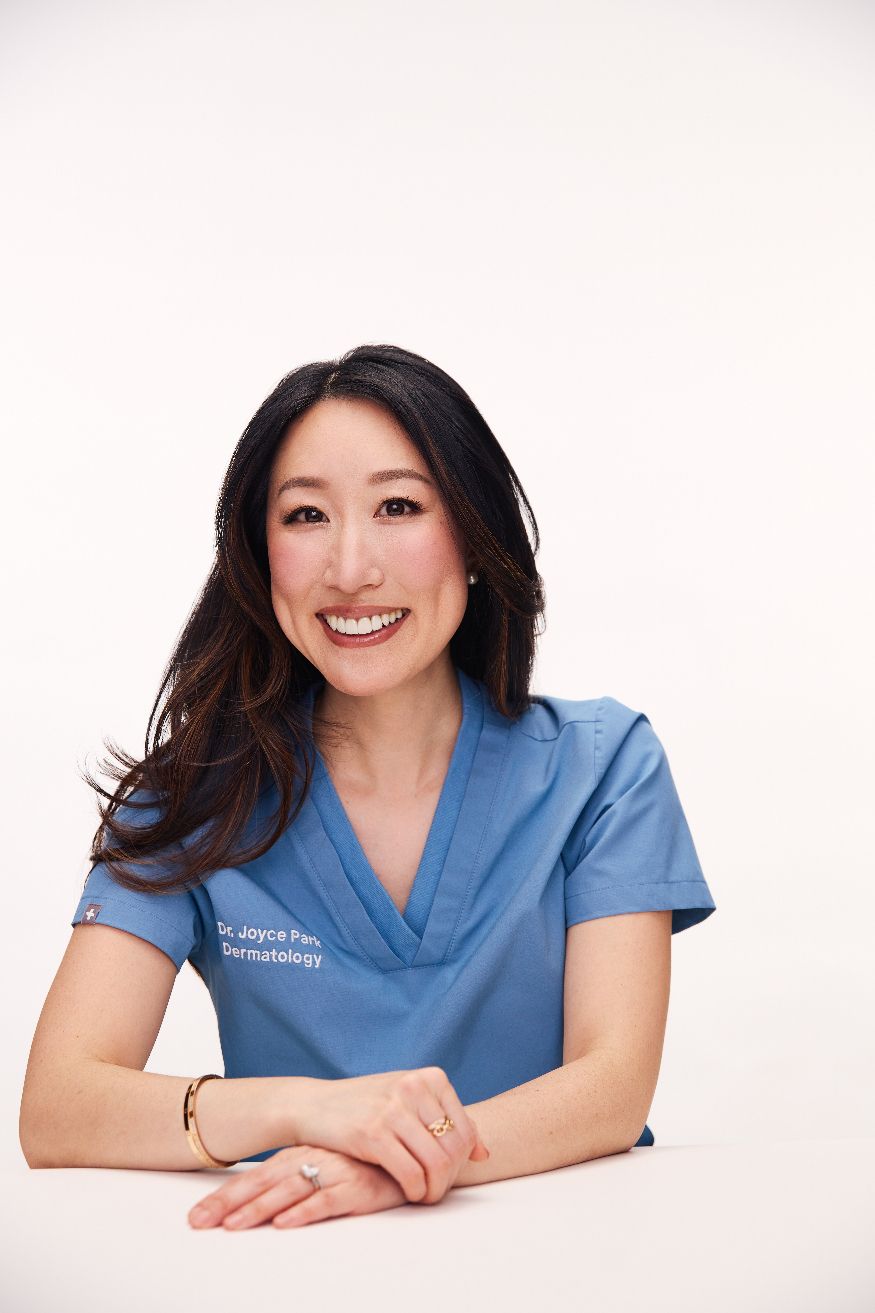
Dr. Joyce Park
Dermatologist & Founder of Kerativ
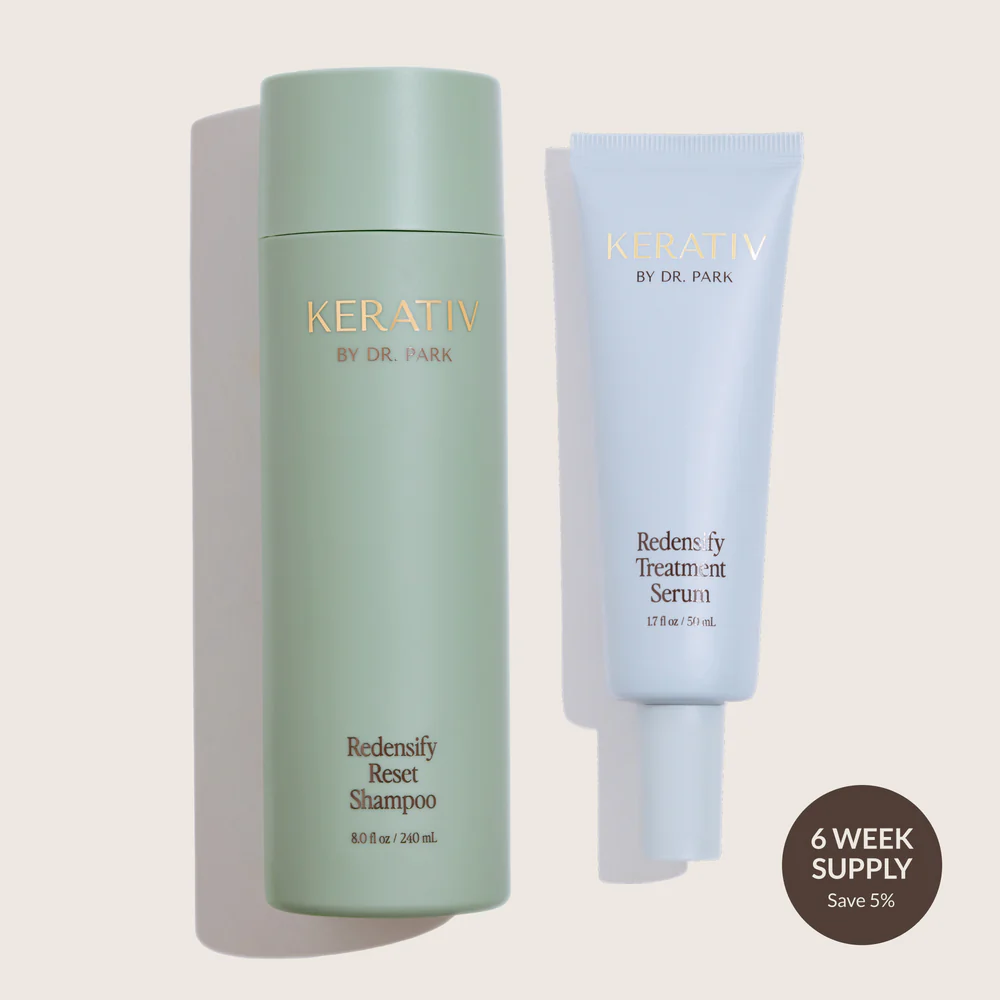
Developed by board-certified dermatologist Dr. Joyce Park, the Redensify Regimen pairs a scalp-clarifying shampoo with a twice-daily leave-on serum. For men experiencing androgenetic alopecia, a consistent scalp routine works as a foundation layer alongside any medical treatments being used.
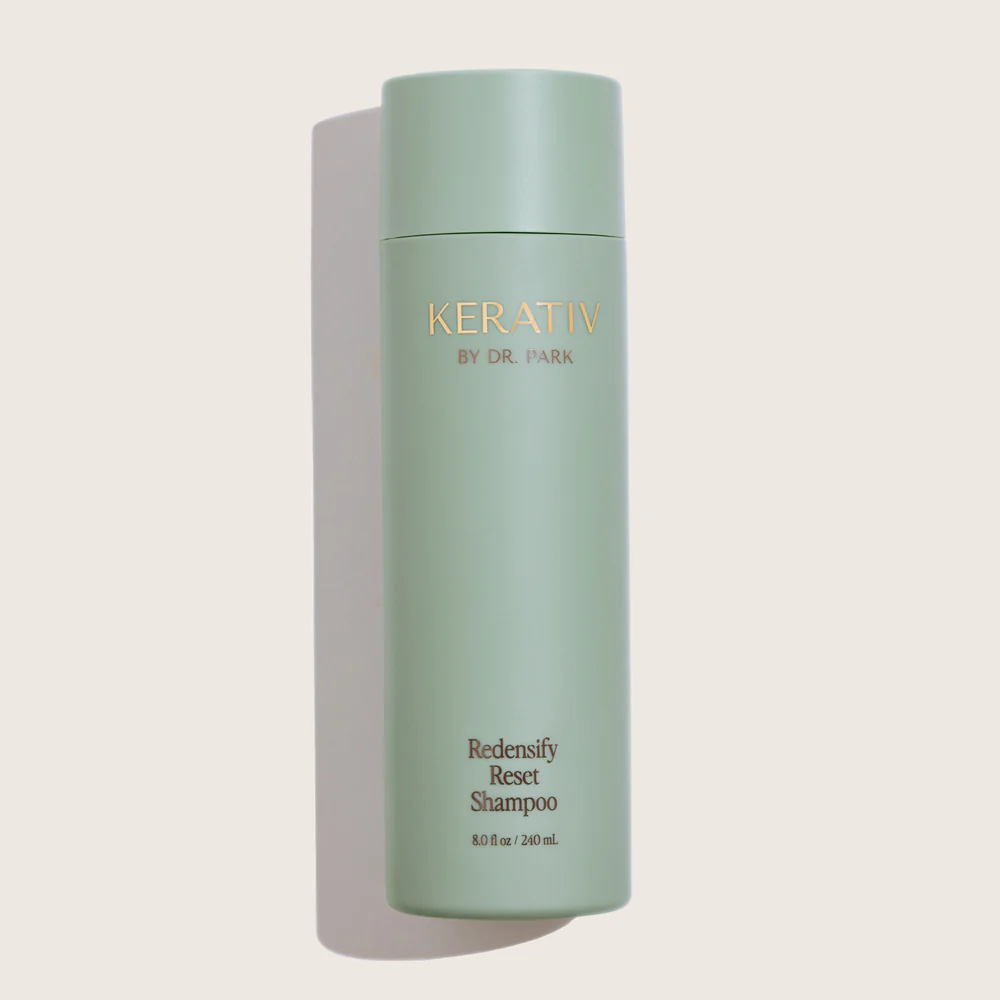
Redensify Reset Shampoo
Scalp-First Cleansing
A dermatologist-developed, sulfate-free gel shampoo that gently purifies the scalp to remove buildup and supports a healthier scalp environment. A clean scalp means active ingredients in any leave-on treatment can reach the follicle more effectively. Leave on for a few minutes before rinsing.
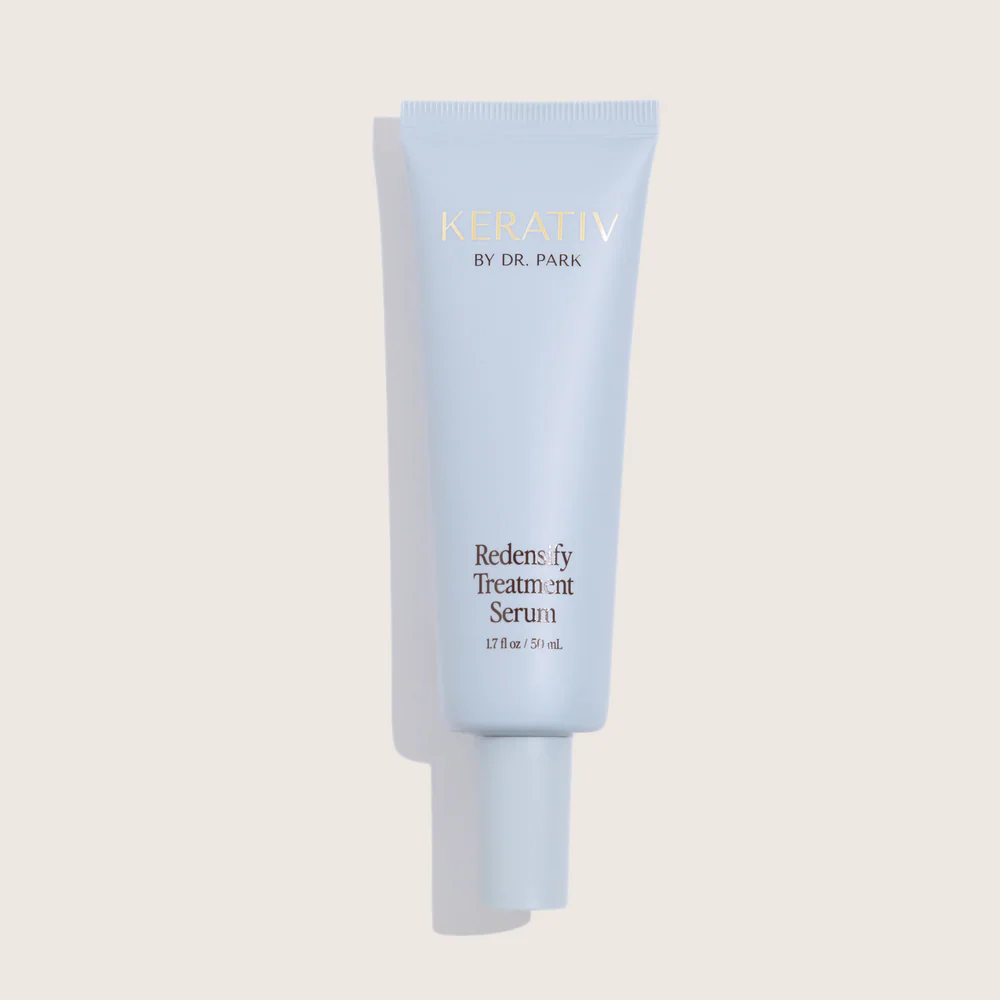
Redensify Treatment Serum
Twice-Daily Scalp Treatment
A dermatologist-developed, fragrance-free scalp serum that nourishes the scalp and follicles to support fuller, denser, healthier-looking hair. Clinically shown to increase hair volume and density after 12 weeks.* Apply twice daily to a dry scalp and do not rinse.
Redensify Regimen
The Complete System
The shampoo and serum together at a bundled price. The complete cleanse-treat system to start a scalp-first approach to supporting a healthy scalp environment.
Supports a healthy follicle environment
The Redensify Treatment Serum is formulated with clinically validated technologies including Redensyl, Kopexil, Saw palmetto, Adenosine, Pumpkin seed oil, Caffeine, and more, to help nourish follicles and support the appearance of fuller, denser hair.
A clean scalp supports any treatment you are already using
Excess sebum and scalp buildup can impede the effectiveness of topical treatments. Regular scalp cleansing with the Reset Shampoo helps maintain a clean, balanced scalp environment.
Consistent routine supports long-term scalp health
Androgenetic alopecia is a chronic, progressive condition. A twice-daily habit builds the consistency that long-term scalp care requires, regardless of which medical treatments you may also be using.
Dermatologist-developed for men and women
The Redensify Regimen was developed by Dr. Joyce Park, board-certified dermatologist, for men and women. Fragrance-free, alcohol-free, and color safe. Free of sulfates and parabens. Vegan and cruelty-free.
Cosmetic products are not drugs and are not intended to diagnose, treat, cure, or prevent any disease. For clinical treatment of androgenetic alopecia, consult a board-certified dermatologist. *Based on a 12-week clinical study with an independent dermatologist evaluation of hair density and volume.
Androgenetic alopecia is not reversible in the traditional sense, but it is highly manageable with early intervention. FDA-approved treatments like topical minoxidil and oral finasteride can significantly slow or halt progression, and some men experience meaningful regrowth when treatment is started early and maintained consistently. Hair that has been lost for many years from fully miniaturized follicles is harder to recover.
Minoxidil and Kopexil both support hair health but work differently. Minoxidil helps stimulate growth by increasing blood flow and extending the growth phase. Kopexil, featured in the Redensify Treatment Serum, helps support the scalp, prevent collagen hardening around hair roots, and promotes fuller-looking hair. They are not interchangeable but can complement each other. Our founder Dr. Joyce Park recommends topical minoxidil often to her patients, and she formulated these products to work synergistically with your existing routine.
As early as possible. The follicles at the hairline and crown that DHT acts upon are most responsive to treatment when they are still producing hair. Once a follicle is fully miniaturized and inactive, topical treatments cannot stimulate it. A dermatologist can assess your stage of loss using the Norwood scale and recommend an appropriate treatment plan.
Consult your dermatologist for specific guidance. In general, apply the Redensify Treatment Serum and minoxidil to a dry scalp at separate times if possible (for example, serum in the morning and minoxidil at night, or vice versa). Both should be applied directly to the scalp and not rinsed off.
Consistency is key. Visible improvements in hair density typically require at least 90 days of consistent use. In the first few weeks, your scalp begins to rebalance, and some may notice a brief increase in shedding as follicles shift into a healthier cycle. Around three months, hair starts to look fuller, with less noticeable thinning. With continued use beyond three months, volume and density continue to improve as stronger strands grow in. Taking weekly scalp photos in consistent lighting is the most reliable way to track subtle changes.