GLP-1 receptor agonists can trigger a temporary but significant shedding episode. Understanding the mechanism helps you respond with the right scalp support at the right time.
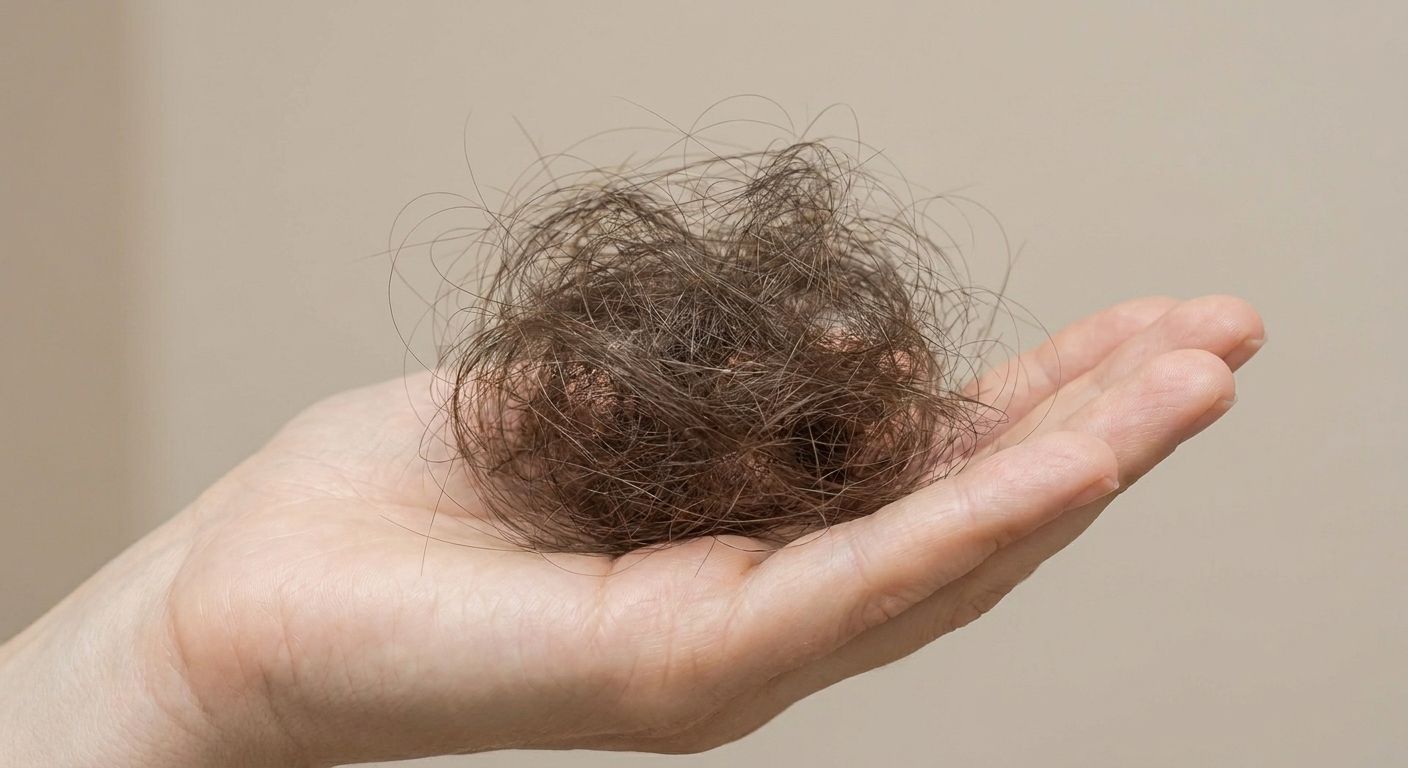
One of my patients came in about four months after starting semaglutide. She had lost 22 pounds, was feeling better than she had in years, and was genuinely proud of her progress. But she was worried. Fistfuls of hair were coming out when she showered, and there was hair shed all over her bathroom floor. She wanted to know if the medication was destroying her follicles permanently. What she was experiencing is one of the most common presentations I see in patients on GLP-1 receptor agonists. The medication had not damaged anything. Her body had been through a significant metabolic event, and her hair follicles were responding to that stress in a predictable way. This type of shedding, called telogen effluvium, is diffuse, non-scarring, and for most people, fully reversible. The follicles are still there. The hair will come back. But understanding what is happening, and supporting your scalp through it, matters.
I explained it to her this way: your hair follicles run on a cycle. Growth phase, transition phase, resting phase, shed. Under normal conditions, only about 10 to 15 percent of your follicles are in the resting or shedding phase at any given time. But when your body experiences significant metabolic stress, it sends a signal that essentially says: non-essential functions, pause. Hair growth is one of those functions. Rapid caloric restriction and significant weight loss are exactly the kind of stressor that triggers this. The GLP-1 medication itself is not the direct culprit. It is the downstream effect of losing weight quickly. Nutritional shifts compound the problem. Protein intake is often inadequate during aggressive caloric restriction, and iron, zinc, and vitamin D levels frequently drop. Each of these deficiencies can independently worsen shedding. In her case, her ferritin had dropped into a range that would sustain the shedding on its own. We adjusted her protein intake, ran a full bloodwork panel, and started her on a scalp-support routine. By six months, her scalp and hair were healthier than ever, and her shedding had normalized
What I Tell My Patients
GLP-1 associated hair loss is typically temporary. In most cases, shedding stabilizes and density begins to recover once the body adjusts to a new weight set point and nutritional status is restored. That said, it is worth getting bloodwork done. Low ferritin, insufficient protein intake, and zinc deficiency are common in people losing weight quickly, and each one can independently sustain shedding well past the initial episode. A dermatologist can help you identify and address those factors while you wait for regrowth.

Dr. Joyce Park
Dermatologist & Founder of Kerativ
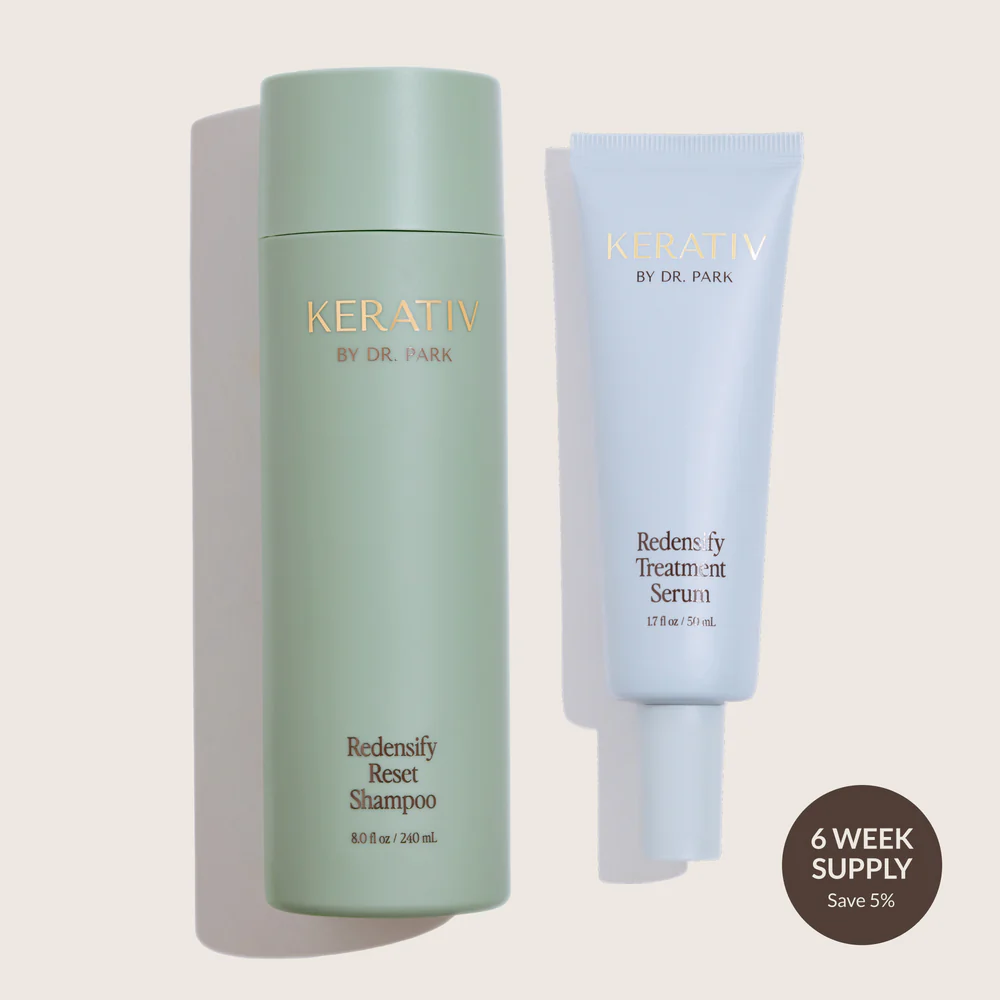
The Redensify Regimen was developed by board-certified dermatologist Dr. Joyce Park to support scalp health and hair density from the outside in. When GLP-1 medications are driving internal metabolic stress, a consistent scalp-first routine can help preserve and support the follicle environment during the shedding phase.
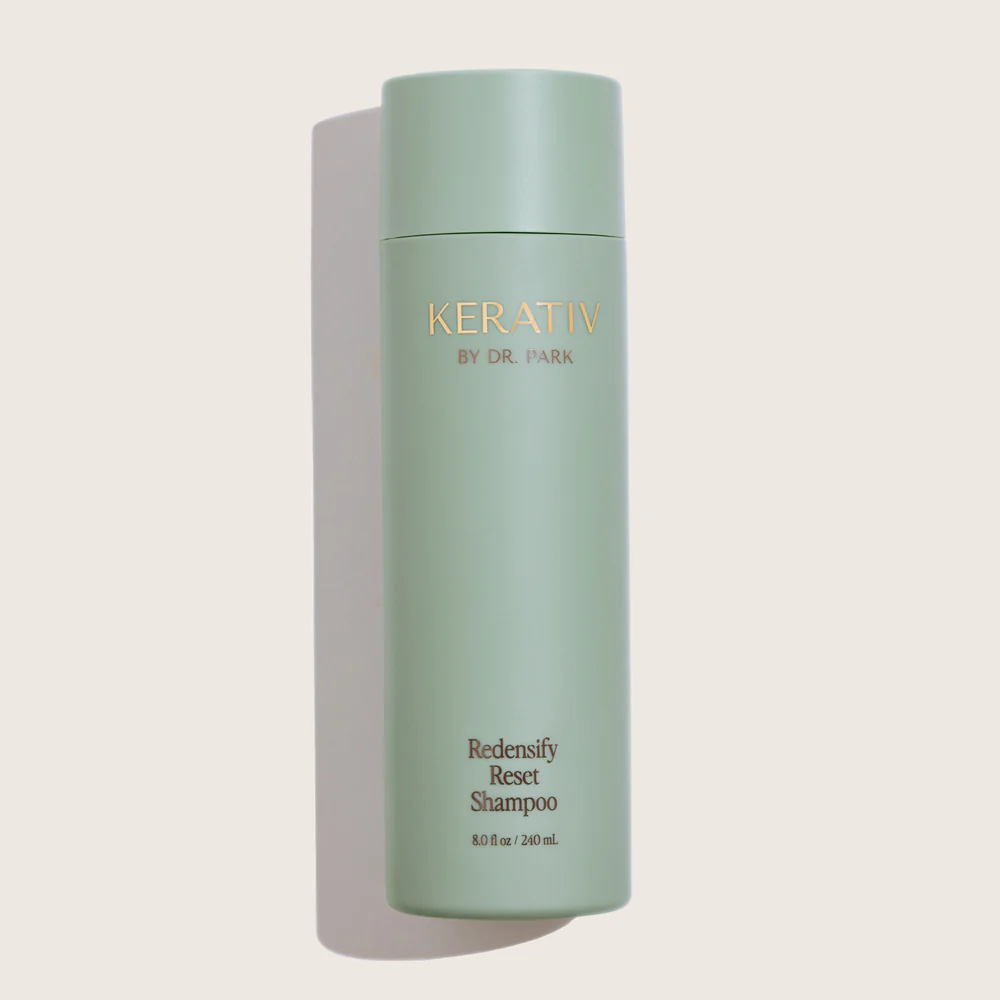
Redensify Reset Shampoo
Scalp-First Cleansing
A dermatologist-developed, sulfate-free gel shampoo that calms and soothes the scalp, removes buildup, and rebalances the scalp microbiome. Adds body and volume from root to tip without stripping the scalp barrier. Apply directly to scalp and leave on for a few minutes before rinsing.
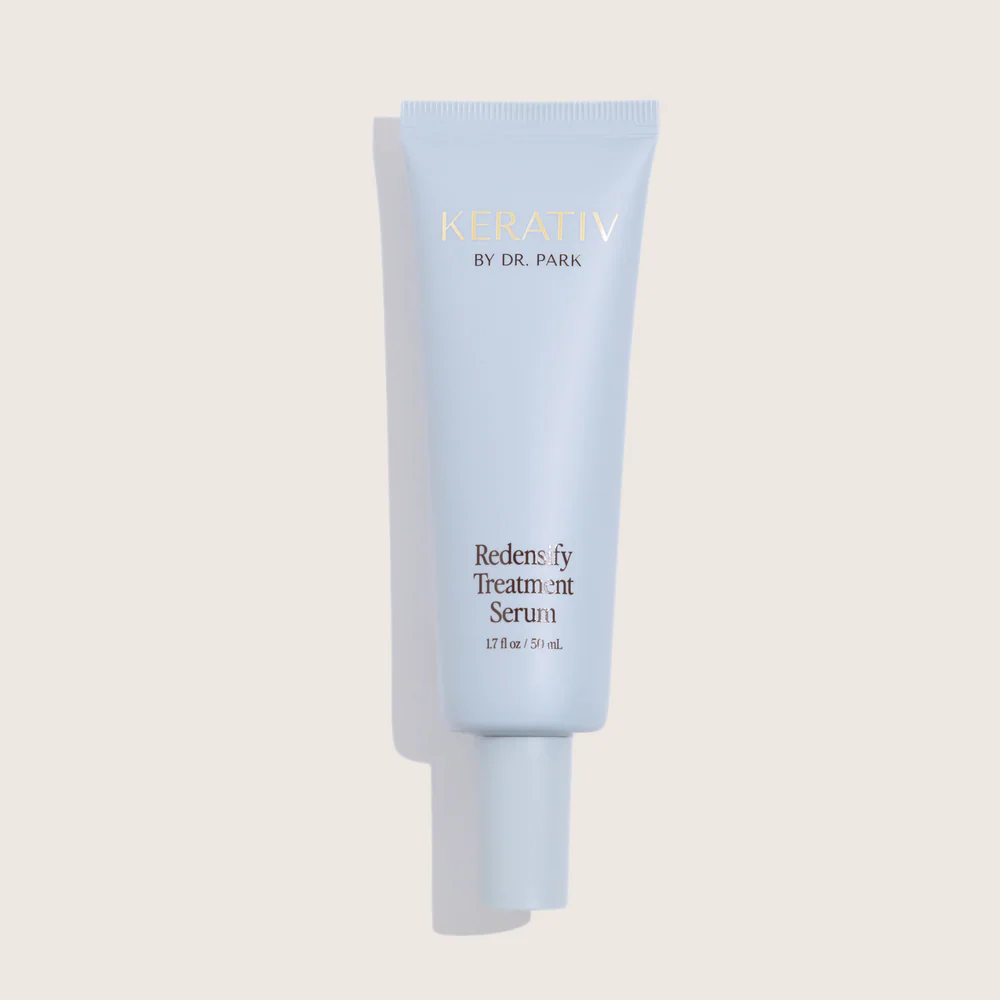
Redensify Treatment Serum
Twice-Daily Scalp Treatment
A dermatologist-developed, fragrance-free scalp serum that nourishes the scalp and follicles to support fuller, denser, healthier-looking hair. Apply twice daily to a dry scalp and do not rinse. Clinically shown to increase hair volume and density after 12 weeks.*
Redensify Regimen
The Complete System
The shampoo and serum together at a bundled price. The most efficient way to start a complete scalp-first routine during and after GLP-1 treatment.
Calm and soothe a stressed scalp
Metabolic stress can affect the scalp environment. The Reset Shampoo calms and soothes the scalp while the Treatment Serum helps support the scalp's natural barrier and overall scalp health.
Support the scalp barrier
Nutritional shifts during caloric restriction can affect the scalp. The gentle, non-stripping formula of the Reset Shampoo maintains the environment follicles need, while the Treatment Serum instantly hydrates the scalp without leaving residue.
Maintain a consistent twice-daily habit
Hair loss during GLP-1 treatment is time-limited for most people. Using the serum twice daily without interruption keeps your scalp in the best possible state while the body rebalances. Use without interruption for optimal results.
Dermatologist-developed for sensitive, thinning scalps
Fragrance-free, alcohol-free, and color safe. Formulated without sulfates or parabens. Vegan and cruelty-free. Suitable for all hair and scalp types including sensitive skin.
Cosmetic products are not drugs and are not intended to diagnose, treat, cure, or prevent any disease. If you are experiencing significant or prolonged shedding, consult a dermatologist or your prescribing physician. *Based on a 12-week clinical study with an independent dermatologist evaluation of hair density and volume.
For most people, GLP-1 associated hair loss is a temporary episode of telogen effluvium. Hair typically begins to recover as the body adjusts to its new weight set point and nutritional status stabilizes. Shedding usually peaks between 3 and 6 months and then gradually slows. If GLP-1 associated telogen effluvium unmasks an underlying progressive hair loss condition such as male or female pattern hair loss, then treating that becomes necessary as well. Regardless of the cause, maintaining a healthy scalp environment during this period supports the best outcome.
This is a conversation to have with your prescribing physician. For most people, the hair loss is temporary and does not warrant stopping a medication that may be important for metabolic health. Dermatologists can help distinguish GLP-1 related shedding from other causes and recommend supportive treatments.
Addressing any nutritional deficiencies that may have developed during caloric restriction is a reasonable step. Iron, zinc, B12, and vitamin D are worth checking via bloodwork. However, supplementing without confirmed deficiency is not routinely recommended. Consult your physician before starting new supplements.
Consistency is key. Visible improvements in hair density typically require at least 90 days of consistent use of the Redensify Treatment Serum. In the first few weeks, your scalp begins to rebalance, and some may notice a brief increase in shedding as follicles shift into a healthier cycle. Around three months, hair starts to look fuller, with less noticeable thinning. With continued use beyond three months, volume and density continue to improve as stronger strands grow in.
The Redensify Treatment Serum is a topical cosmetic product and is not known to interact with GLP-1 medications. However, if you have questions about using any new product alongside a prescription medication, checking with your prescribing physician or pharmacist is always a reasonable step.