Female pattern hair loss affects millions of women and is often misunderstood. Understanding what's driving the change is the first step toward addressing it with confidence.
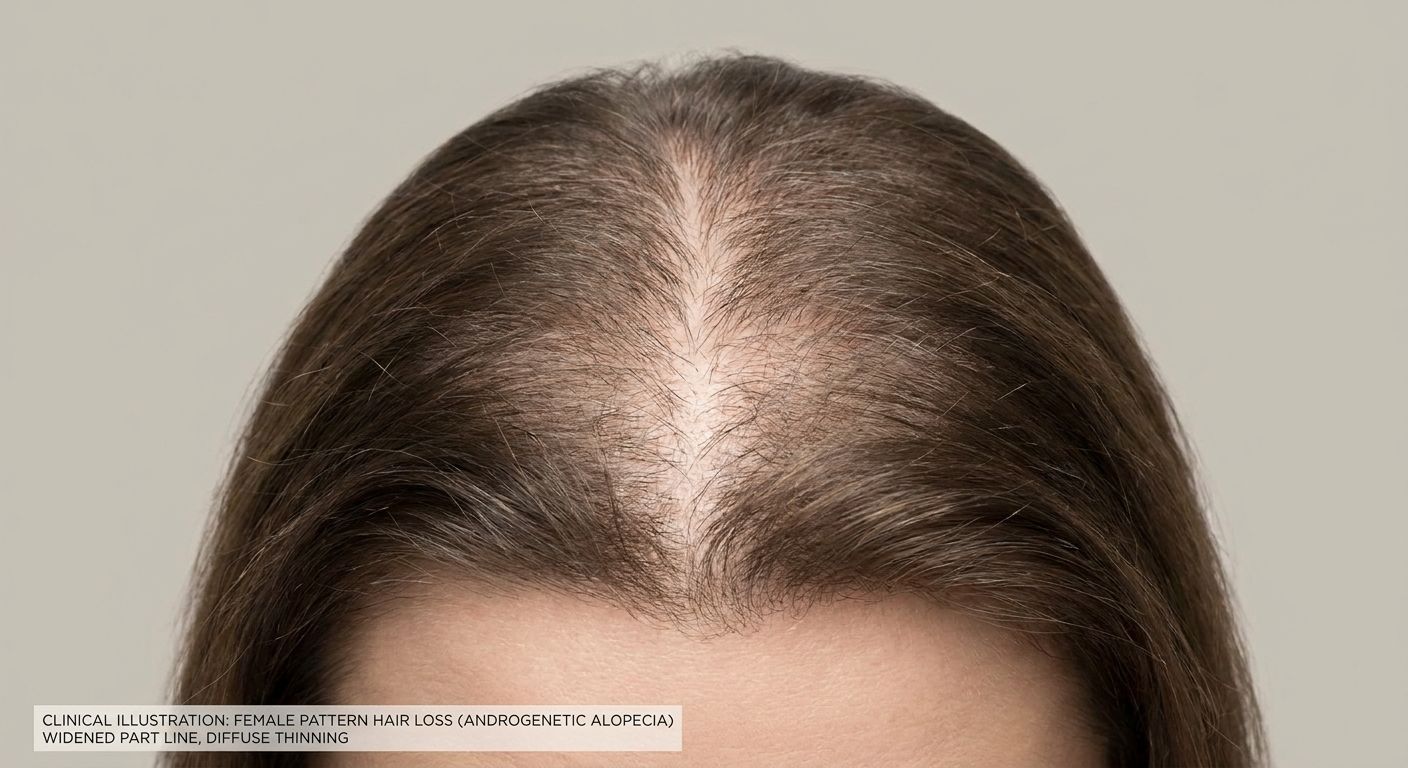
A patient in clinic recently told me, "I know this probably sounds vain, but I swear my ponytail used to be twice this thick." She came in at 44, otherwise healthy, a little reluctant to even be there. She had noticed it first in photos: more scalp visible at the part, a flatter silhouette when she pulled her hair back. Then the extra hair in the shower drain. Then the way her hat fit differently. She had chalked it up to stress for two years before coming in. This is one of the most common presentations I see. Female pattern hair loss does not announce itself the way male pattern baldness does. There is no receding hairline, no defined bald spot, no sudden dramatic change. Instead, it arrives gradually: diffuse thinning at the part line, reduced density through the crown, strands that seem finer than they used to be. Women often second-guess themselves for years before seeking a diagnosis, and by then the process has been underway for quite some time.
When I sit down with my patients with female pattern thinning, I explain it this way: your follicles are not disappearing, they are miniaturizing. With each growth cycle, the hairs you produce comes back a little shorter, a little finer, a little less pigmented. The follicle is still there, but its output is diminishing. For most women, the underlying driver is a genetic sensitivity to androgens, particularly DHT. These women inherit follicles that are more reactive to hormonal fluctuations over time, whether from perimenopause, postpartum shifts, or simply the cumulative hormonal changes of aging. The follicles do not fail overnight. They gradually become less capable of producing a full, terminal hair, which is why the change can feel so hard to pinpoint until it is already well established. It is also worth noting that not every woman with this presentation has the same contributing factors. In clinic, I always rule out thyroid dysfunction, iron deficiency, and elevated androgens before landing on a diagnosis, because those are treatable causes that can look nearly identical on the surface.
What I Tell My Patients
Female pattern hair loss can look similar to telogen effluvium, a type of diffuse shedding triggered by stress, illness, or hormonal shifts. A dermatologist can tell the two apart through a visual exam, pull test, dermoscopy, and bloodwork. An accurate diagnosis determines whether the right approach is medical treatment, lifestyle changes, or a targeted scalp-care routine.

Dr. Joyce Park
Dermatologist & Founder of Kerativ
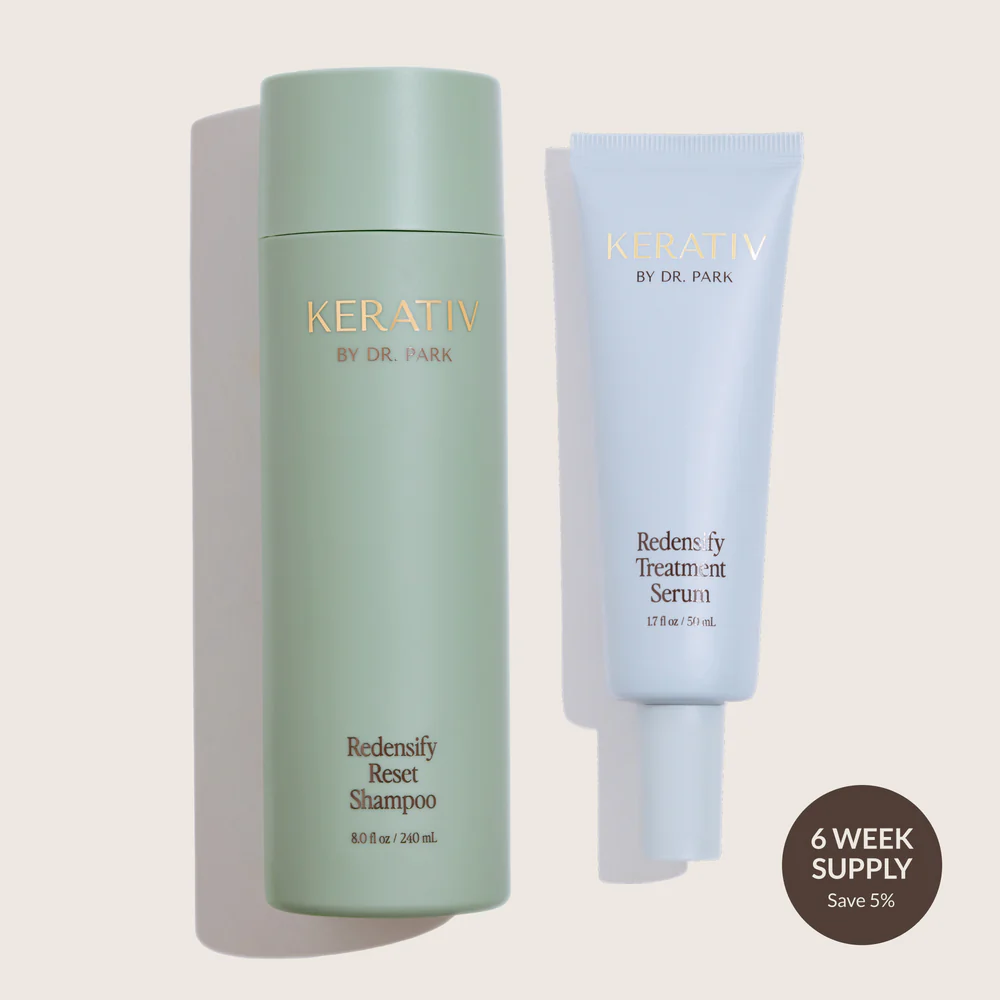
Dr. Joyce Park developed the Redensify Regimen specifically for thinning scalps. For women managing the gradual density loss of female pattern hair loss, consistent scalp-first care creates the healthiest possible environment for follicles to function well.
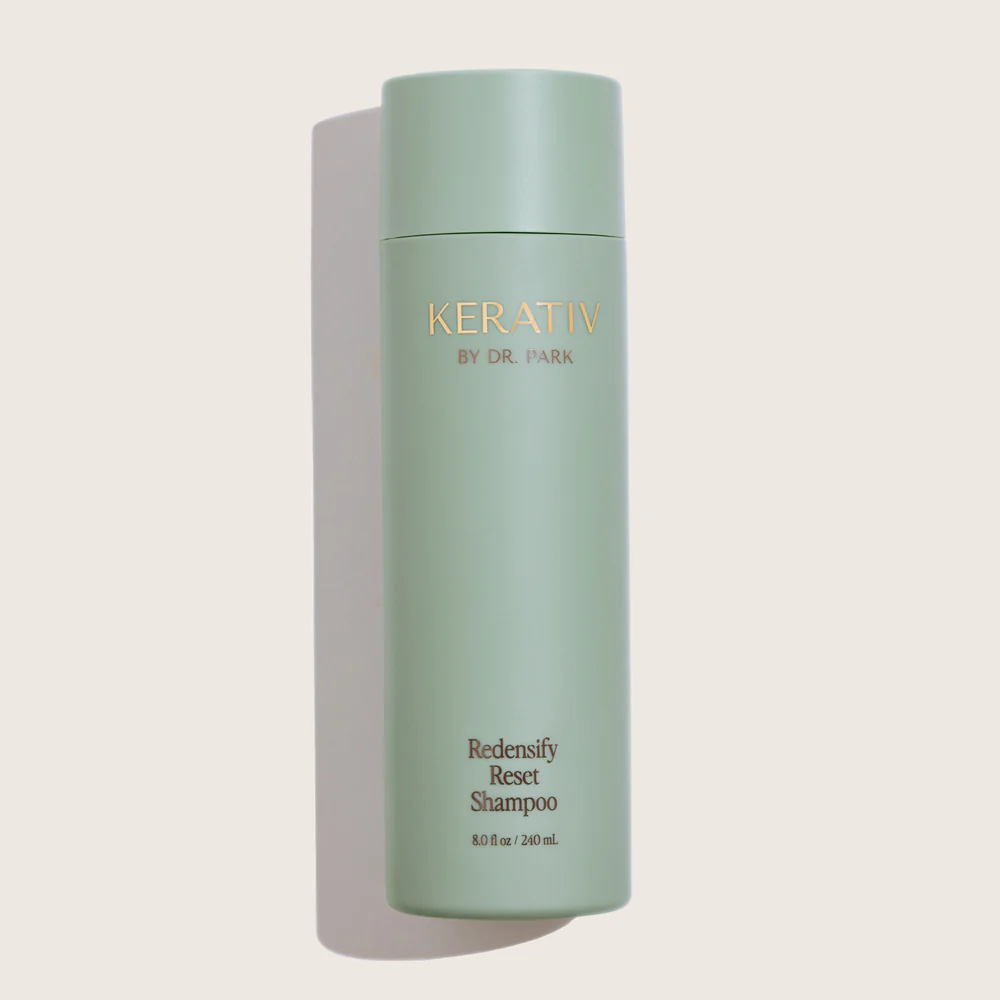
Redensify Reset Shampoo
Scalp-First Cleansing
A dermatologist-developed, sulfate-free volumizing gel shampoo that removes buildup and supports a healthier scalp environment. Lifts from root to tip for fuller, thicker-looking hair. Apply directly to the scalp, leave on for a few minutes, then rinse.
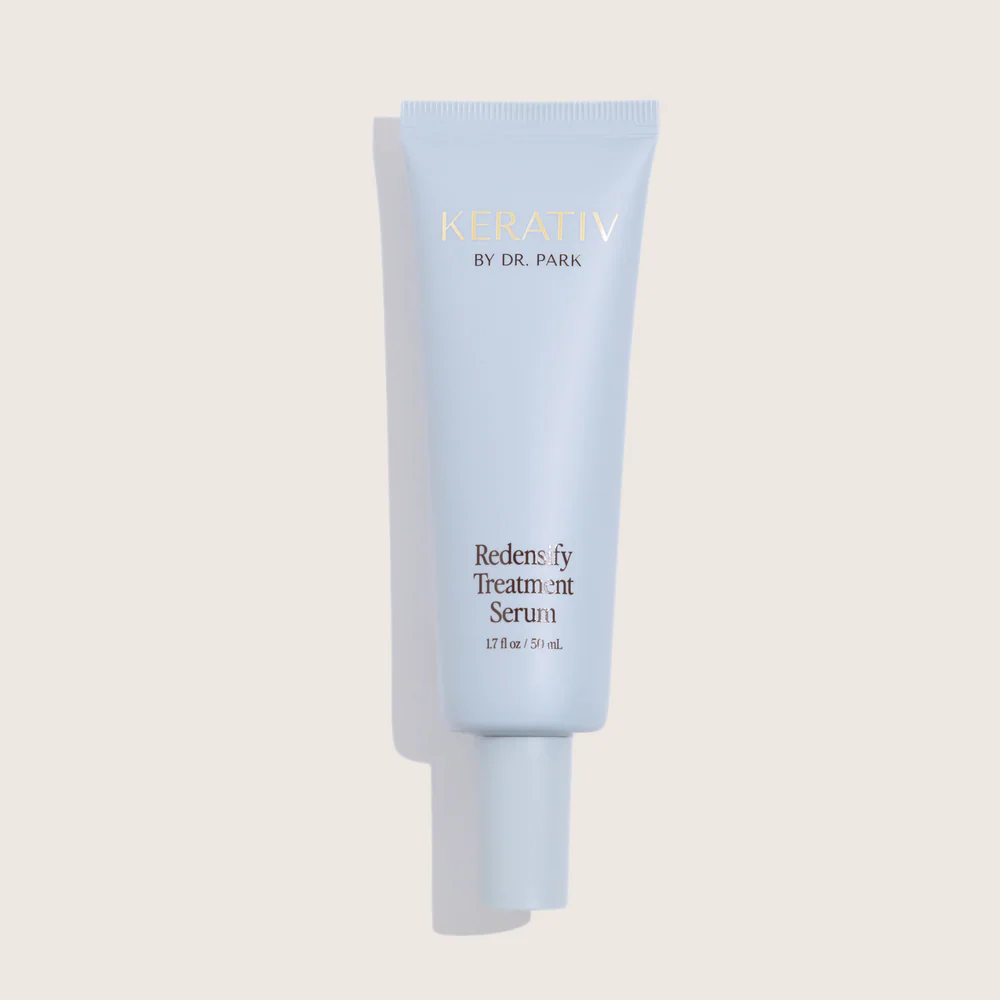
Redensify Treatment Serum
Twice-Daily Scalp Treatment
A dermatologist-developed, fragrance-free scalp serum that nourishes the scalp and follicles to support fuller, denser, healthier-looking hair. Apply twice daily to a dry scalp and leave in. Clinically shown to increase hair volume and density after 12 weeks.*
Redensify Regimen
The Complete System
The shampoo and serum together at a bundled price. The complete cleanse-and-treat system for women taking a proactive, dermatologist-guided approach to scalp health.
Clinically validated ingredients for follicle support
The Redensify Treatment Serum is formulated with clinically validated technologies including Redensyl, Kopexil, Saw palmetto, Adenosine, Pumpkin seed oil, Caffeine, and more, to help nourish follicles and support the appearance of fuller, denser hair.
A gentle retinoid for scalp cell renewal
Adapinoid, a third-generation retinoid in the serum, helps revitalize scalp skin and support healthy cell turnover. It is better tolerated than retinol while delivering similar benefits. Use sunscreen with daily use.
Formulated for all hair types and textures
Color-safe and suitable for fine, thinning, color-treated, curly, and sensitive hair. Free of sulfates, alcohol, and parabens. Vegan and cruelty-free.
Designed for a long-term, progressive condition
Female pattern hair loss is chronic. A consistent twice-daily routine builds the habits that long-term scalp care requires, and is designed to complement any medical treatments your dermatologist recommends.
Cosmetic products are not drugs and are not intended to diagnose, treat, cure, or prevent any disease. For clinical evaluation and treatment of female pattern hair loss, consult a board-certified dermatologist. *Based on a 12-week clinical study with an independent dermatologist evaluation of hair density and volume.
Female pattern hair loss typically presents as diffuse thinning at the part line and crown with a preserved frontal hairline. Several conditions can look similar, including telogen effluvium and thyroid-related shedding. A dermatologist can distinguish between them using a visual exam, pull test, dermoscopy, and bloodwork to rule out contributing factors like thyroid dysfunction, iron deficiency, or elevated androgens.
Yes, and earlier intervention generally produces better outcomes. Topical minoxidil is the leading FDA-approved treatment. Oral spironolactone is commonly prescribed off-label. The Redensify Regimen is a cosmetic scalp-care routine formulated to support the appearance of fuller, denser hair alongside any medical treatment your dermatologist recommends.
No. Minoxidil is an FDA-approved drug that works by increasing scalp blood flow and extending the hair growth phase. The Redensify Treatment Serum is a cosmetic product that supports the scalp environment through different mechanisms, including Kopexil, which helps maintain follicle structure and promotes fuller-looking hair. They are not interchangeable, but they are designed to work well together. Dr. Park regularly recommends topical minoxidil to her own patients and formulated these products to complement an existing treatment routine.
Most people need at least 90 days of consistent twice-daily use before seeing visible improvement. In the early weeks, the scalp begins to rebalance, and a brief increase in shedding is normal as follicles shift into a healthier growth cycle. Around the three-month mark, hair typically begins to look fuller and thinning becomes less noticeable. Progress is gradual, so taking a baseline photo of your part in consistent lighting is the best way to track change over time.
Yes. The Redensify Reset Shampoo is sulfate-free and safe for color-treated hair. The Treatment Serum is applied directly to the scalp, not the hair shaft, so it does not affect color. Both products are free of alcohol, sulfates, and parabens.